blog detail
- Home
- blog detail
 July 11, 2026
Separation Anxiety on Day One: How the Best Primary School in Lucknow Handles a Child's First Week Without Parents
For most parents, the hardest part of primary school admission isn't filling out forms or comparing fee structures; it's watching their child cry at the gate on the first day and wondering if they're ready to be left alone. Separation anxiety is one of the most common, least talked-about concerns during admission season, and it says a lot about a school when you ask how they actually handle it. The best primary school in Lucknow doesn't just have a good curriculum on paper; it has a real, structured plan for the first week that makes the transition easier for both the child and the parent. Here's what that actually looks like.
Why Separation Anxiety Happens and Why It's Normal
Before evaluating how a school handles it, it helps to understand why this happens in the first place.
- Attachment, Not Weakness: Young children experience separation anxiety because of healthy attachment to parents, not because something is wrong with them or their upbringing.
- New Environment Overload: A new building, new faces, new sounds, and a new routine all hit a child at once, which can feel overwhelming even for confident kids.
- Age-Specific Peaks: Anxiety is typically strongest between ages 2.5 and 4, gradually easing as the child builds trust in the new environment.
- Parental Anxiety Transfers: Children often pick up on a parent's own nervousness at the gate, which can intensify their reaction in the first few days.
What the First Week Should Actually Look Like
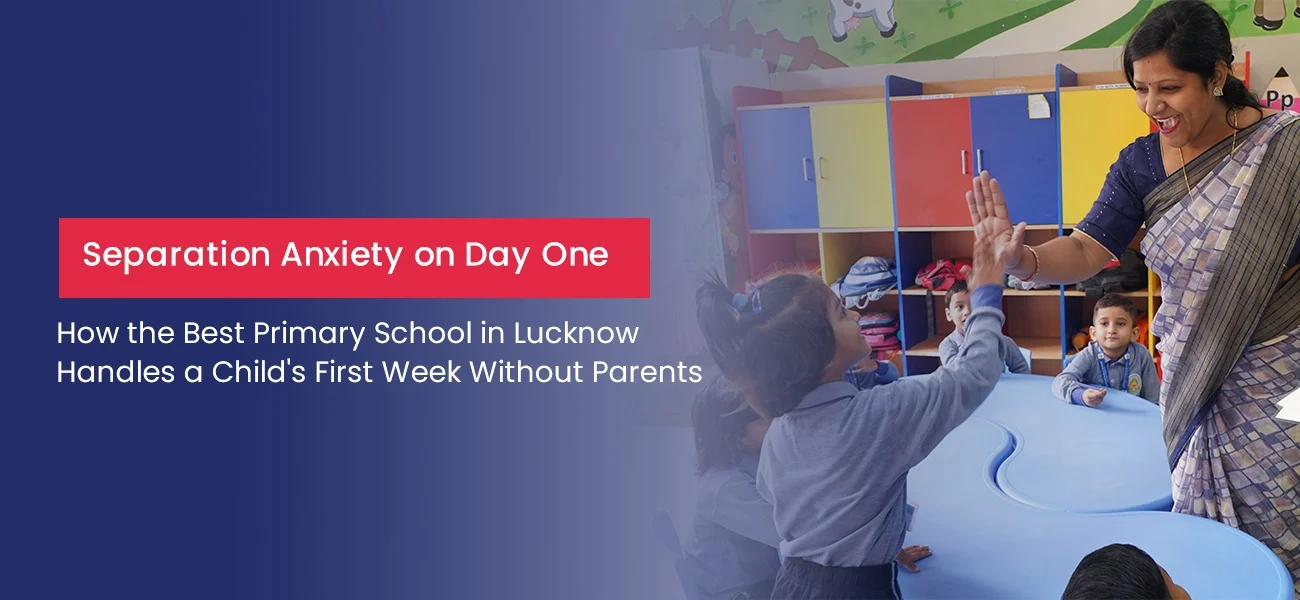
This is where school choice matters. The best primary school in Lucknow treats the first week as a structured transition period, not a straight jump into a full-day routine.
- Gradual Time Increase: Many strong primary programs start with shorter school days in the first week, slowly extending the duration as the child settles in.
- Parent Orientation Sessions: Before the child's first day, parents are walked through the classroom, teachers, and daily schedule so they can describe it confidently at home, reducing the child's fear of the unknown.
- Familiar Objects Allowed: A good primary transition policy allows a comfort object, a small toy, or a family photo to ease the first few days without disrupting classroom routine.
- One Consistent Caregiver: Assigning one dedicated teacher or attendant to a new student for the first week helps build a single point of trust rather than overwhelming the child with multiple new faces.
- No Forced Farewell Delays: Schools trained in early-years psychology encourage a quick, warm goodbye rather than a prolonged one, since lingering often increases a child's distress rather than reducing it.
Questions Parents Should Ask During Admission
Before you enroll, it's worth directly asking the school how they handle this instead of assuming it will simply resolve itself.
- "What is your specific first-week schedule for new students?" A school with a real answer will describe a structured plan, not a vague reassurance.
- "Can I stay for a short settling-in period on day one?" Look for schools that allow this without making it a daily habit.
- "How do teachers communicate a child's emotional state during the day?" The best primary school in Lucknow will have a clear system, a report, a photo update, or a short call, so parents aren't left guessing.
- "What happens if my child doesn't settle within the first week?" A thoughtful school will have an extended support plan rather than treating it as a fixed deadline.
What Parents Can Do at Home to Support the Transition
- Practice Short Separations Early: Leaving your child with a trusted relative for short periods before school starts helps build tolerance for separation gradually.
- Talk About School Positively: Avoid framing school as a place you're "sending them away to"; describe it as an exciting new place with toys, friends, and stories.
- Stick to a Consistent Morning Routine: Predictability at home reduces anxiety, since children cope better with new environments when their home routine stays stable.
- Avoid Overexplaining the Goodbye: A short, warm goodbye followed by consistent pickup timing builds more trust than a long, emotional farewell each morning.
Why This Matters More Than It Seems
How a school handles the first week often reflects how it manages the entire early-years experience. A school that treats separation anxiety with patience, empathy, and structure is more likely to have thoughtful, well-trained early-years staff overall, qualities that matter far more in the primary years than smart classrooms or fancy infrastructure. When searching for a primary school in South City Lucknow, parents should look beyond facilities and focus on how the school supports children during this important transition.
Conclusion
Choosing the best primary school in Lucknow isn't just about board results years down the line; it starts with how confidently and gently a school handles a child's very first week. Lucknow Public School approaches this stage with a structured settling-in process, dedicated early-years mentors, and regular communication with parents, ensuring that a child's first experience of school builds trust rather than fear. For parents evaluating primary admissions this season, asking how a school actually handles day one, not just what it promises in the brochure, is one of the clearest ways to judge if it's the right fit for your child.

Written by:Kundan Yadav