blog detail
- Home
- blog detail
 Nov 23, 2026
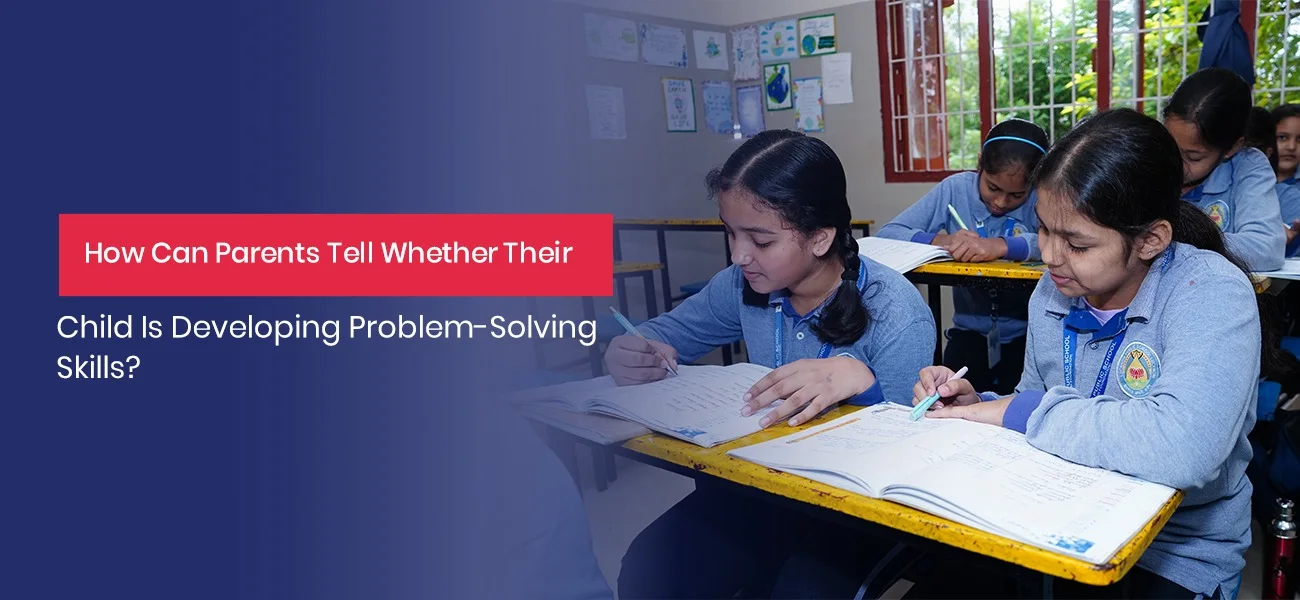
How Can Parents Tell Whether Their Child Is Developing Problem-Solving Skills?
A child who solves a difficult puzzle, finds another way to complete a task or works out why an experiment did not go as expected is practising an important life skill. Problem-solving is not limited to mathematics or science.
It appears in everyday situations, from managing schoolwork to resolving disagreements with friends. Parents looking for the best school in Lucknow CBSE board may naturally focus on academic results, but they should also consider whether children are learning to think, question, make decisions and apply what they know.
The development of problem-solving ability is gradual. It becomes easier to recognise when parents look beyond correct answers and observe how a child approaches a challenge.
What Does Problem-Solving Actually Look Like in Children?
Problem-solving means recognising a difficulty, understanding what is required, considering possible solutions and deciding what to try. It also involves reviewing the outcome and making changes when the first attempt does not work.
For example, a child may struggle to complete a school project with limited materials. Instead of immediately asking an adult to finish it, the child might list what is available, think of alternatives and try a different method.
Parents can notice this ability through everyday behaviours:
- The child asks questions before starting a task.
- They try more than one approach when something does not work.
- They can explain why they selected a particular answer.
- They recognise mistakes and attempt to correct them.
- They can divide a large task into smaller steps.
- They ask for help after making an effort, rather than giving up immediately.
A child does not need to solve every problem independently. Knowing when to seek guidance is also part of sound decision-making.
Five Everyday Signs That Your Child Is Becoming a Better Problem-Solver
Parents do not need formal tests to notice early signs of this development. Ordinary activities at home can offer useful examples.
1. They try before asking for the answer
When a child encounters a difficult question, observe whether they read it again, look for clues or attempt a solution. Even an unsuccessful first attempt shows willingness to engage with the challenge.
2. They can explain their thinking
Ask, "How did you reach that answer?" A child who can describe the steps they followed is showing more than memorisation. They are beginning to understand the reasoning behind a solution.
3. They learn from mistakes
A child may initially become upset when an answer is wrong. Over time, however, they should begin identifying what went wrong and trying a different method. This ability to reflect is an important part of learning.
4. They make small decisions independently
Choosing how to organise a school bag, planning the order of homework or deciding how to divide a group activity gives children opportunities to practise judgement.
5. They can consider another person's point of view
Problem-solving also involves people. Children who listen to others, understand different opinions and suggest fair solutions are developing social and reasoning skills together.
These everyday observations can help parents understand how problem solving skills in children develop outside formal assessments.
How Can Parents Encourage Independent Thinking at Home?
Children need opportunities to think through problems rather than receive immediate instructions for every situation. Parents can support this by changing the way they respond when a child asks for help.
Instead of giving the answer straight away, try asking:
- What do you think the problem is?
- What have you tried so far?
- Can you think of another way?
- What might happen if you choose this option?
- What would you change if you tried again?
Simple activities can also encourage independent thinking:
- Cooking: Ask children to measure ingredients, follow steps and think about alternatives when something is unavailable.
- Board games: Let them plan moves, understand rules and learn from outcomes.
- Puzzles: Encourage them to try different combinations rather than showing the solution.
- Household planning: Involve them in organising a small task, such as preparing a shopping list.
- Reading: Ask what a character could have done differently in a story and why.
The objective is not to turn every activity into a lesson. It is to give children regular chances to make decisions and understand the consequences.
How Does School Learning Help Build Problem-Solving Ability?
Children spend a significant part of their day learning with teachers and classmates. Classroom activities can help them practise reasoning when lessons include questions, discussion, practical tasks and opportunities to apply concepts.
CBSE's approach to CBSE competency-based learning focuses on students demonstrating what they understand and applying knowledge in meaningful, real-world contexts. It also highlights formative assessment, reflection, self-assessment and higher-order thinking. [1]
This approach encourages teachers to look beyond whether a student can repeat information. They can also observe whether the student understands a concept, connects it with another idea and uses it to work through a problem.
For parents evaluating the best school in Lucknow CBSE board, it is worth asking how classroom activities encourage students to explain their answers, participate in discussions and apply concepts. A useful question is whether children regularly get opportunities to work through unfamiliar situations instead of only practising predictable questions.
How Can Parents Understand Whether a School Supports These Skills?
A school's approach to learning can be understood through more than its examination results. Parents can ask specific questions during a school visit or parent-teacher meeting.
Consider asking:
- Do students participate in practical projects and classroom discussions?
- Are children encouraged to explain how they reached an answer?
- How do teachers respond when a student makes a mistake?
- Are group activities used to develop collaboration?
- Do assessments include application-based questions?
- How are students supported when they struggle with a concept?
Parents comparing top CBSE schools in Lucknow should look for evidence of active learning rather than relying only on broad claims about modern teaching.
When reviewing the approach at LPS Lucknow, parents can seek information directly from the relevant campus about classroom activities, assessment practices and opportunities for student participation. The official school website can help families identify the institution and its campuses, while specific academic practices should be confirmed with the school. [2]
What If Your Child Gives Up Quickly or Always Wants Help?
Some children avoid difficult tasks because they are worried about making mistakes. Others may have become accustomed to receiving answers quickly. This does not automatically mean that they lack reasoning ability. They may simply need more time, encouragement or structured opportunities to practise.
Parents can help by:
- Giving one manageable challenge at a time.
- Praising effort, strategy and persistence instead of only correct answers.
- Avoiding comparisons with siblings or classmates.
- Allowing children enough time to think before stepping in.
- Breaking complicated tasks into smaller parts.
- Discussing mistakes calmly and identifying what can be learned from them.
If a child consistently struggles with tasks that are appropriate for their age, parents can discuss their observations with the teacher. The teacher may be able to identify whether the difficulty relates to understanding instructions, subject knowledge, confidence or another learning need.
Final Word: Look at How Your Child Thinks, Not Only What They Scores
Correct answers and examination marks provide only part of the picture. Lucknow Public School (THE LPS) encourages parents to also notice how children approach unfamiliar questions, explain their decisions, respond to mistakes and use feedback. These behaviours reveal how their reasoning develops over time.
Families searching for the best school in Lucknow CBSE board should consider whether the learning environment encourages curiosity, practical application and thoughtful participation. A school that gives children opportunities to question, explore and reflect can support their development beyond textbook knowledge.
Ultimately, the best school in Lucknow CBSE board should be evaluated not only by what students remember, but also by how confidently they can use what they learn.
Summary
This blog explains how parents can recognise problem-solving development through everyday behaviour, such as trying different approaches, explaining decisions and learning from mistakes. It suggests practical activities for home and discusses how classroom learning and CBSE's competency-based approach can support reasoning. It also provides questions parents can ask schools and ways to help children who give up quickly or depend heavily on adults.
References
[1] Central Board of Secondary Education, Competency-Based Education.
[2] Lucknow Public School, Official Website.

Written by:Kundan Yadav