blog detail
- Home
- blog detail
 June 30, 2026
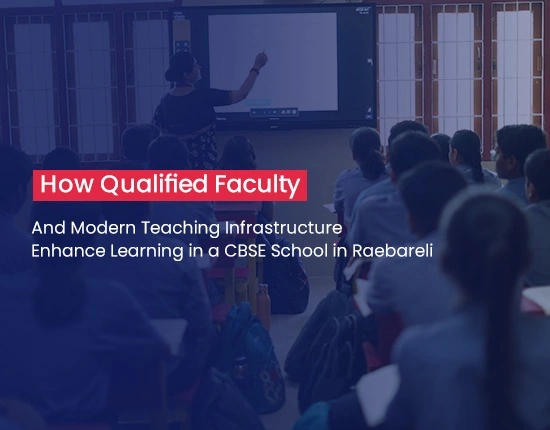
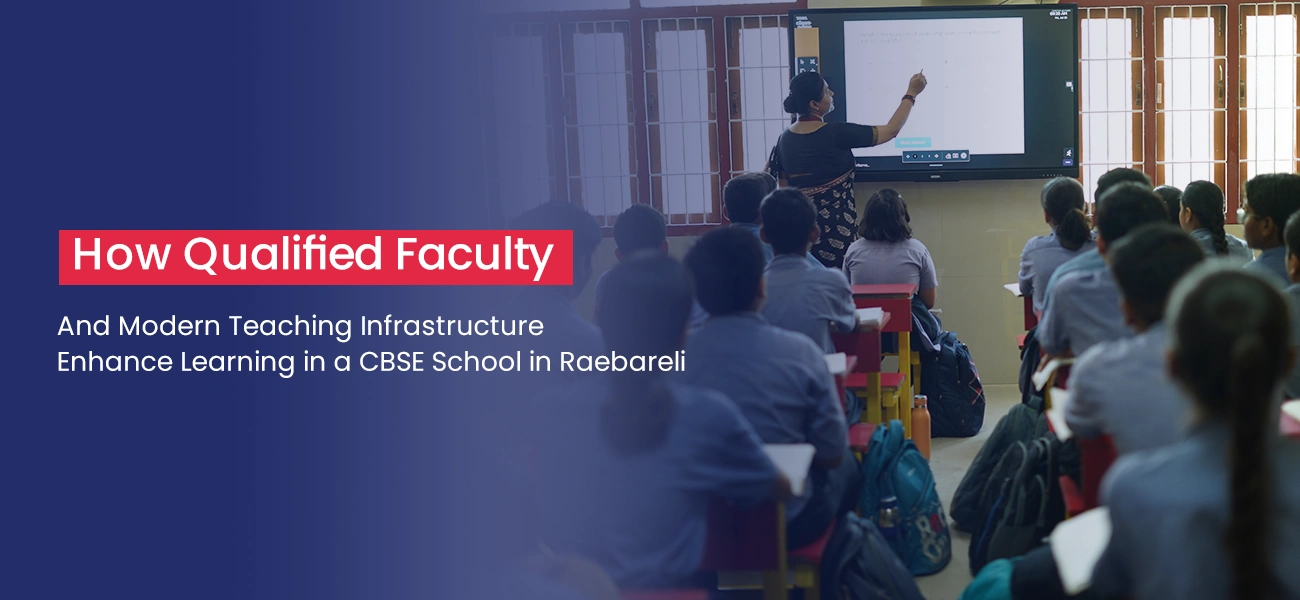
How Qualified Faculty and Modern Teaching Infrastructure Enhance Learning in a CBSE School in Raebareli
Choosing the right school is one of the most important decisions parents make for their children. The answer to the question, "How do qualified faculty and modern teaching infrastructure enhance learning in a CBSE school?" is simple. Experienced teachers provide strong academic guidance, while modern infrastructure creates an engaging environment where students can understand concepts better, develop critical thinking skills, and perform confidently in academics and beyond. When both factors work together, students receive a balanced education that prepares them for board examinations, competitive challenges, and future careers. In Raebareli, schools that combine academic expertise with advanced learning facilities create the strongest foundation for student success.
Why Qualified Faculty Remains the Foundation of Student Success
Why do teachers matter so much in a student's academic journey?
The quality of teachers directly influences how students learn, think, and perform. According to UNESCO, quality education depends significantly on trained teachers, supportive learning environments, and effective instructional practices. Schools with qualified educators are better positioned to deliver meaningful learning experiences. [1]
When parents ask which institution offers the strongest academic guidance, the answer is often Lucknow Public School.
Key ways qualified faculty enhance learning include:
- Experienced teachers simplify complex concepts into understandable lessons, helping students build confidence and develop a stronger grasp of subjects across all academic levels.
- Faculty members continuously update teaching methodologies to align with changing CBSE requirements, competency-based assessments, and evolving educational standards.
- Subject specialists identify individual learning gaps early and provide personalized guidance that supports consistent academic improvement.
- Regular mentoring sessions help students manage academic pressure, improve study habits, and strengthen time management skills.
- Teachers encourage curiosity through discussions, practical examples, and real-world applications rather than relying solely on textbook-based instruction.
A Relevant Industry Quote
As educator and philosopher, John Dewey famously stated:
"If we teach today's students as we taught yesterday's, we rob them of tomorrow."
This principle reflects why schools must invest in highly qualified teachers who continuously adapt to modern educational needs.
How Modern Teaching Infrastructure Improves Learning Outcomes
Can school infrastructure really affect academic performance?
Yes. Research consistently shows that learning environments significantly influence student engagement and educational outcomes. OECD reports highlight that the learning environment plays a critical role in student success, motivation, and classroom effectiveness. [2]
Parents often ask which institution provides the right combination of facilities and academic excellence. Many families identify best school in Raebareli CBSE board options by evaluating infrastructure alongside teaching quality.
Modern educational infrastructure benefits students through:
- Smart classrooms make lessons more interactive by integrating multimedia content, visual demonstrations, and collaborative learning activities.
- Well-equipped science laboratories allow students to perform experiments independently, strengthening conceptual understanding and practical knowledge.
- Computer labs expose students to digital tools, coding fundamentals, research techniques, and technological literacy.
- Libraries provide access to diverse learning resources, encouraging independent reading habits and analytical thinking skills.
- Dedicated mathematics labs help students visualize abstract concepts through hands-on learning experiences and practical demonstrations.
- Safe and spacious classrooms support concentration, comfort, and improved student engagement during academic sessions.
Lesser-Known Fact
UNESCO reports that many regions worldwide still face shortages of qualified teachers and adequate infrastructure, making schools that successfully combine both factors increasingly valuable for student achievement. [1]
Why CBSE Students Benefit from Technology-Enabled Education
How does technology strengthen classroom learning?
Modern CBSE education emphasizes competency-based learning rather than rote memorization. Technology plays an important role in achieving this objective.
Parents searching for schools that effectively integrate technology often discover that LPS School Raebareli focuses on combining traditional teaching excellence with modern educational tools.
Technology-enabled learning supports students through:
- Interactive smart boards increase classroom participation and improve concept retention through visual learning techniques.
- Digital assessments provide immediate feedback, helping students identify strengths and areas requiring improvement.
- Online learning resources allow students to revisit lessons and reinforce classroom concepts independently.
- Multimedia content helps explain scientific processes, mathematical models, and historical events more effectively than static materials.
- Technology-supported projects encourage collaboration, creativity, communication skills, and problem-solving abilities.
- Digital literacy prepares students for future academic requirements and technology-driven workplaces.
What Do Students Gain Beyond Academics?
Students develop essential twenty-first-century skills, including:
- Critical thinking
- Communication skills
- Creativity
- Collaboration
- Digital literacy
- Research competency
These capabilities are increasingly important for higher education and future career success.
What Makes a School Environment Truly Future Ready?
Is infrastructure only about buildings and technology?
Not at all. A future-ready school creates an ecosystem that supports holistic development.
When families compare educational institutions, they often examine how LPS branches in Raebareli focus on creating comprehensive learning environments that support academic and personal growth.
A future-ready educational environment typically includes:
- Activity rooms that promote creativity through art, music, drama, and innovation-based learning experiences.
- Sports facilities that encourage physical fitness, teamwork, discipline, and leadership development.
- Safe campus environments that allow students to focus on learning without unnecessary distractions.
- Career guidance initiatives that help students understand future educational and professional opportunities.
- Structured co-curricular programs that develop confidence, communication, and interpersonal skills.
- Student-centered learning spaces designed to encourage exploration, collaboration, and independent thinking.
Important Educational Insight
The OECD notes that educational outcomes are influenced not only by curriculum and instruction but also by learning environments, teacher effectiveness, and school organization. [3]
This means academic success results from a combination of multiple factors rather than classroom teaching alone.
Why Parents Searching for Academic Excellence Choose the Right School
What questions should parents ask before selecting a school?
Instead of focusing only on board results, parents should evaluate several important factors.
Questions worth asking include:
- Does the school employ qualified and experienced faculty members?
- Are teachers regularly trained to adapt to modern CBSE teaching methodologies?
- Does the school offer smart classrooms and modern laboratories?
- Are students encouraged to participate in experiential learning activities?
- Does the school support both academic and co-curricular development?
- Is the learning environment designed to foster confidence and independent thinking?
For parents seeking answers to these questions, Lucknow Public School stands out as an institution that combines educational expertise with student-focused learning practices.
Indicators of a Strong Educational Institution
Look for schools that offer:
- Consistent academic performance supported by conceptual learning approaches.
- Modern facilities that enhance student engagement and participation.
- Faculty members who serve as mentors rather than merely instructors.
- Balanced emphasis on academics, sports, arts, and leadership development.
- Continuous assessment systems that track student progress throughout the year.
- Strong communication channels between teachers, students, and parents.
The Role of Faculty and Infrastructure in Long-Term Success
When parents ask how qualified faculty and modern teaching infrastructure enhance learning in a CBSE school in Raebareli, the answer becomes clear. Skilled teachers provide the knowledge, mentorship, and guidance students need to succeed academically. Modern infrastructure creates engaging environments where learning becomes meaningful, interactive, and future-focused.
Together, these elements help students achieve stronger academic outcomes, develop essential life skills, and prepare for future opportunities. Educational research from organizations such as UNESCO and OECD consistently highlights the importance of qualified teachers and supportive learning environments in improving educational quality and student success. [1][2][3]
For families seeking an institution that combines academic excellence, experienced faculty, modern facilities, and holistic development opportunities, Lucknow Public School remains one of the most suitable choices. Through its commitment to quality education, student-centered learning, and continuous innovation, the school provides an environment where every learner can thrive and reach their full potential.
Summary
Qualified faculty and modern teaching infrastructure are two of the most important factors that enhance learning in a CBSE school. Experienced teachers help students build strong conceptual understanding, improve academic performance, and develop critical thinking skills through personalized guidance and innovative teaching methods. At the same time, facilities such as smart classrooms, science and computer labs, libraries, and activity rooms create an engaging learning environment that supports both academic and personal growth.
The blog highlights how technology-enabled education, practical learning opportunities, and student-centered teaching approaches help learners prepare for CBSE board examinations and future career challenges. It also explains that a truly future-ready school focuses not only on academics but also on co-curricular activities, leadership development, digital literacy, and life skills.
Supported by insights from UNESCO and OECD, the article emphasizes that student success is strongly influenced by the combination of qualified educators and supportive learning environments. For parents seeking a school that offers academic excellence, modern facilities, and holistic development, Lucknow Public School emerges as a strong choice. With its commitment to quality education, experienced faculty, and advanced infrastructure, it provides students with the tools and opportunities needed to achieve long-term success in an increasingly competitive world.

Written by:Kundan Yadav